
Between January and June 2025, ESG and ED&I became decisive commercial factors across the UK’s professional and commercial services sectors. What was once framed as compliance or employer branding is now shaping how organisations win clients, secure investment and design their workforce.
Across finance, legal, consulting, HR and corporate services, leaders are under growing pressure to prove that sustainability and inclusion commitments are credible, measurable and embedded into everyday decision-making. This shift is creating both opportunity and tension, particularly in the labour market.
ESG has moved from reporting exercise to business lever
In early 2025, UK organisations increasingly reframed ESG reporting as a tool for innovation and resilience rather than a regulatory burden. Around two thirds of UK firms now view ESG reporting as an innovation driver, linking it directly to operational efficiency, risk management and long-term value creation. At the same time, over 80 percent of organisations remain committed to ESG goals, even as political and media debate around ESG intensifies.
This matters because ESG is no longer owned solely by sustainability teams. Responsibility now sits across finance, governance, procurement, HR and commercial leadership. As a result, employers are redesigning roles to combine ESG literacy with core professional skills.

ED&I is becoming part of governance, not a standalone initiative
ED&I followed a similar path in the first half of 2025. While some organisations reduced the visibility of standalone DE&I programmes, many embedded inclusion directly into governance, pay transparency and workforce strategy.
The most significant driver has been regulation. Gender pay gap reporting remains mandatory for large employers, but the UK Government’s March 2025 consultation on ethnicity and disability pay gap reporting signalled a clear direction of travel. Employers are now preparing for broader disclosure requirements, which is accelerating investment in workforce data, analytics and reward governance.
This shift has moved ED&I away from policy statements towards evidence. Organisations are increasingly judged on outcomes rather than intent, particularly by candidates and clients.
What the data is telling us
Several clear signals emerged from UK data and employer surveys in the first half of 2025:
- 69 percent of UK organisations now see ESG reporting as a source of innovation and competitive advantage.
- More than 80 percent of UK employers report continued commitment to ESG and sustainability goals.
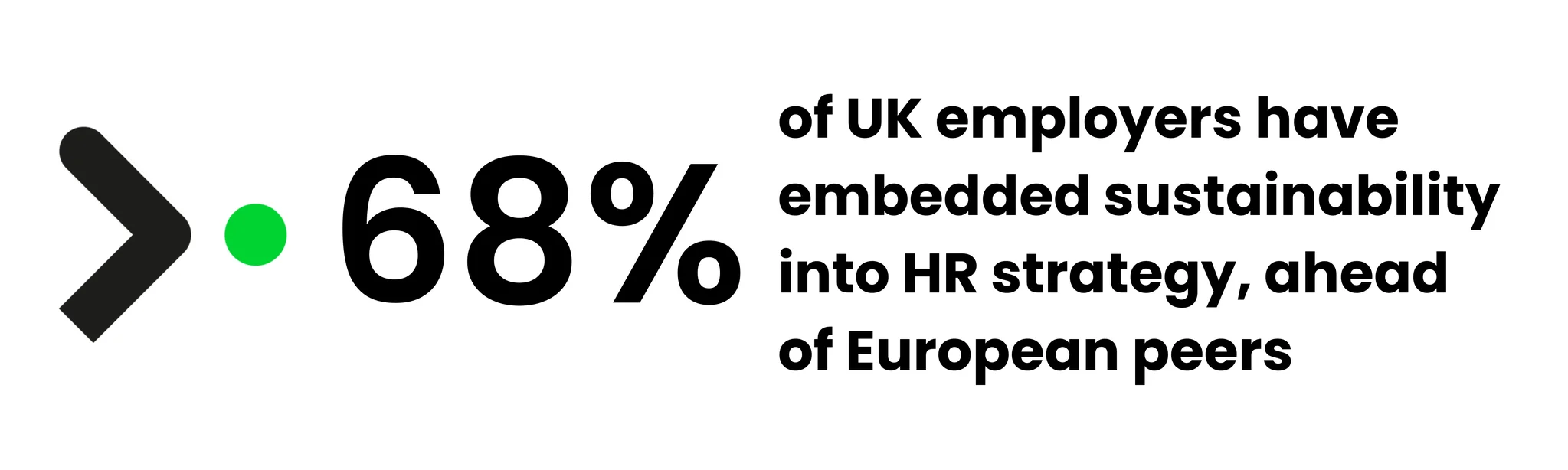
- 68 percent of UK employers have embedded sustainability into HR strategy, ahead of European peers.
- ESG and sustainability job postings have grown sharply, with London seeing ESG-related vacancies increase by more than 200 percent year on year, while the supply of qualified candidates has risen by less than 10 percent.
The result is a widening skills gap in ESG analytics, sustainability reporting, governance and inclusive workforce design.
How ESG and ED&I are reshaping hiring
The labour market impact is now clear. ESG and ED&I priorities are driving demand for roles that did not exist at scale five years ago, while also reshaping traditional professional positions.
Roles seeing sustained growth include:
- ESG and Sustainability Analysts
- Sustainable Finance and ESG Audit Specialists
- Governance, Risk and Compliance Professionals
- DE&I and Pay Gap Reporting Leads
- Responsible Procurement and Supply Chain Managers
Employers are increasingly seeking professionals who can translate ESG commitments into measurable action. Data literacy, regulatory understanding and cross-functional experience are now as important as subject matter expertise.
Salary pressure reflects this imbalance. ESG specialists continue to command premiums over comparable non-ESG roles, particularly in London and major commercial hubs.
Sector leaders and laggards
Not all sectors are moving at the same pace. In the first half of 2025:
- Accountancy, finance and consulting led the market, driven by client demand for ESG reporting, assurance and advisory services.
- Legal services and HR showed strong progress, particularly where ESG regulation and pay transparency intersect.
- Procurement, facilities management and corporate services are progressing steadily but face notable skills shortages.
- Administrative and business support functions have seen slower, more incremental change.
For recruiters, this uneven progress creates targeted opportunity rather than a one-size-fits-all ESG hiring boom.
Regional momentum across the UK
London remains the UK’s primary hub for ESG, sustainability and governance roles, particularly within finance, consulting and corporate headquarters. However, momentum is building elsewhere.
Cities such as Manchester, Edinburgh and Cardiff are strengthening their ESG and inclusion ecosystems, supported by professional services growth, public sector frameworks and regional investment. These locations are increasingly attractive for employers looking to balance specialist capability with cost and retention considerations.
What happens next
Looking ahead to 2026, several themes are likely to intensify:
- Greater accountability for net zero delivery rather than ambition
- Expansion of pay transparency and workforce reporting
- Stronger links between ESG, culture and productivity
- Increased scrutiny of ethical AI and data governance
For employers, this means ESG and ED&I capability will increasingly determine competitiveness. For candidates, it means demand for skills that combine technical expertise with sustainability and inclusion literacy will continue to grow.
For Matchtech, the opportunity is clear. ESG and ED&I are no longer niche specialisms. They are reshaping the commercial and professional workforce, creating long-term demand for specialist recruitment insight and trusted talent partnerships.
Sources
All insights are drawn from UK-focused sources published in 2025, including:
- Institute of Sustainability Studies, UK ESG reporting and innovation analysis (2025)
- Browne Jacobson, UK organisational commitment to ESG (2025)
- UK Government, Sustainability Reporting Guidance 2025 to 2026
- Linklaters, UK ESG and pay gap legislative updates (April 2025)
- CIPD and HR industry reporting on sustainability and HR strategy (2025)
- LinkedIn UK labour market analysis on ESG and sustainability roles (2025)
- HR Review and The HR Director, UK employer sustainability surveys (2025)